
The moment you decide to hire your first person outside your home country, something shifts. What felt like a staffing decision suddenly becomes a legal question, a tax question, a compliance question — and nobody in the room has the answer. You open three browser tabs, close them, and quietly wonder if you’re about to do something irreversible.
That moment is exactly where Deel lives. Not as a nice-to-have HR tool, but as the thing that makes that specific problem manageable — often for the first time.
This review is based on conversations with operators who use Deel, along with hands-on research into the platform to understand where it works well and where it may fall short. Rather than focusing only on features, it aims to reflect how Deel actually fits into day-to-day operations and the kinds of challenges it helps solve. The goal is to offer a clear, practical sense of what you can expect when using i
So this is that review. Not the feature tour. The actual experience.
Before Deel: What Global Hiring Actually Felt Like (deel review)
There’s a version of global hiring that founders talk about romantically: tap into talent anywhere, build distributed teams, pay in any currency. The reality, without the right infrastructure, is a mess of wire transfers to strangers, informal contracts you found on Reddit, and a recurring low-grade anxiety that you’re one audit away from a fine you can’t afford.
The pattern is consistent across teams that have been through it. A developer in Serbia getting paid through PayPal. A designer in Egypt receiving a bank transfer that took 11 days and arrived short because of intermediary fees nobody warned them about. A copywriter in the Philippines having to explain to her bank every month why she was receiving money from a foreign entity. For companies that pride themselves on treating contractors well, the payment experience was often objectively worse than a corporate job — and nobody had a clean fix.
The tools that get evaluated in this situation tell the same story. Gusto is excellent for US-only payroll but stops making sense the moment someone has a non-US address. Remote.com is a legitimate competitor with a cleaner UI in some areas, but their employer-of-record coverage has historically felt thinner than Deel’s in certain regions. Rippling is powerful if you want a full HR operating system, but the implementation lift for a 12-person team was significant. None of them quite solved the problem the way Deel eventually did.
Related : Deel vs Remote vs Rippling: Best EOR for Scaling Agencies
12 Outcomes That Actually Change How Teams Operate

Most Deel reviews list features. What matters is what changes because of those features. Here are twelve outcomes that shift how teams hire, operate, and think about their global workforce.
1. Hiring someone in another country stopped feeling like a legal risk
Before Deel, every cross-border hire started with a conversation that went: “Do we need an entity there? Can we use a contractor? What are the misclassification rules?” With Deel’s Employer of Record (EOR) service, that conversation collapses. Deel becomes the legal employer in the target country. They handle the local labor law compliance, the taxes, the statutory benefits. You manage the person, the work, and the output. The legal exposure, at least structurally, moves to Deel.
This doesn’t mean you can ignore local norms. But it means you can hire without waiting six months to incorporate a subsidiary in a country you’re not sure you’ll be in long-term.
2. Contractors started getting paid faster than full-time employees at previous companies
The payment experience on Deel is genuinely good. Contractors can choose from multiple withdrawal methods — bank transfer, Payoneer, Wise, Coinbase, even prepaid Deel cards in some regions. Payments that used to take 11 days now arrive within 24 to 48 hours. More than one contractor told us, unprompted, that working with us felt more professional than companies twice our size, specifically because of how payment worked. That’s a retention argument, not just an ops argument.
3. Contracts stopped being a bottleneck
Deel generates compliant, country-specific contractor and employment agreements automatically. You enter the role, scope, compensation, and start date. Deel produces the contract. The contractor signs digitally. Done. Teams that were previously circulating a one-size-fits-all contract template drafted years ago find this a genuine revelation — not just faster, but actually safer.
4. Offboarding became something we could do cleanly
Nobody writes about offboarding in SaaS reviews. It’s not exciting. But when a contractor relationship ends — whether well or badly — the logistics matter. Final payments, IP assignment confirmation, access revocation, contract termination notices.
Deel has flows for all of it. Teams that have had to terminate a contractor under an EOR arrangement in a country with strong worker protections report that Deel’s compliance guidance — notice periods, severance calculations, local requirements — makes the difference between a clean exit and improvising in a legal language nobody on the team speaks.
5. Finance had a single source of truth for global compensation costs
Before Deel, finance teams at distributed companies were typically building a spreadsheet every quarter — pulling from PayPal exports, bank statements, and manually logged wire transfers — to arrive at something approximating “total global team cost.” It was never fully accurate. With Deel, that number lives on a dashboard, updated automatically, exportable in whatever format the accountant needs. It sounds mundane until a VC asks for fully-loaded headcount costs across all jurisdictions during a funding round. Suddenly having that number clean and instant matters a lot.
6. The compliance calendar will stop being your problem
Every country has deadlines. Mandatory bonuses in certain Latin American countries. Pension contributions in the UK. Payroll tax filings in Germany. Before Deel, keeping track of these across multiple jurisdictions was either a full-time job or something that quietly slipped through the cracks. Deel’s compliance engine surfaces these obligations and, in most cases, handles them. The cognitive load reduction on the ops side alone made the subscription worth it.
7. Currency exposure became visible and manageable
Paying contractors in multiple currencies used to mean unpredictable costs because the exchange rate at the time of payment determined what was actually spent. Deel lets you see and approve costs in your base currency, with transparent FX rates, before the payment goes out. It’s not a hedging product, but it makes the exposure knowable rather than mysterious. For a team with contractors in a dozen countries, that’s a meaningful operational improvement.
8. Giving equity to international contractors becomes structurally possible
Deel has an equity management component — Deel Equity — that lets you grant options or restricted stock to people who aren’t US employees without the usual compliance nightmare of figuring out tax treatment in each recipient’s country. It’s not perfect for every structure, but for a company trying to retain key contractors with some upside, having a tool that at least attempts to make this organized is better than the alternative, which is usually a bespoke legal engagement that costs $15,000 and takes four months.
9. team in higher-risk countries felt more secure
Contractors operating in regions with unstable local banking systems or high inflation face a problem that most US-based tools ignore entirely. The ability to receive payment in USD or euros — and to hold it in a Deel wallet rather than converting it immediately to a depreciating local currency — is genuinely meaningful to them. This isn’t a feature Deel markets heavily in the US. But for contractors in certain African and South American markets, it’s not a convenience — it’s a financial stability tool.
10. Scaling down was as clean as scaling up
When teams need to reduce contractor hours across the board — a common Q4 reality — the old world meant individual conversations followed by awkward manual adjustments to payment amounts, amended contracts, and updated spreadsheet rows. In Deel, it becomes a series of contract amendments, reviewed and signed digitally by each contractor, with updated payment schedules reflecting immediately. What would have been two weeks of admin work compresses to hours.
11. Audits stopped being a source of existential dread
During due diligence processes for strategic partnerships or investment rounds, legal teams regularly request documentation of contractor relationships: contracts, payment records, IP assignments, and evidence of proper classification. Without a platform like Deel, reconstructing that paper trail across PayPal histories and Google Docs can take weeks. With Deel, the entire package exports from a single interface in under two hours. Legal teams consistently describe it as the cleanest contractor documentation they encounter from companies at the startup stage.
12. Hiring velocity actually increased
This is the aggregate outcome of everything above. When hiring a contractor in a new country goes from a three-week legal exercise to a 48-hour process, teams hire differently. They move faster. They say yes to talent they’d previously have passed on because the logistics felt too heavy. Countries that once seemed too complicated to hire in become accessible. The talent unlocked by removing process friction is real and probably underappreciated in most ROI calculations about these tools.
What Deel Gets Wrong (Or At Least, What Frustrated Us)
Any review that doesn’t include honest critique is trying to sell you something. Here’s what genuinely annoyed us.
The pricing structure is opaque until you’re in a sales conversation
Deel doesn’t list pricing transparently for its EOR product, which is where the real costs live. You know it’s going to be several hundred dollars per employee per month, but the exact number depends on the country, the employment type, and what add-ons you need. This isn’t unusual in the enterprise HR space, but it makes it hard to budget accurately before you’ve had a demo.
Contractor management pricing is clearer and tiered, but EOR feels like it requires a relationship before you can plan for it financially. Given that Deel is positioning itself as the solution for lean teams who need to move fast, the friction of “contact sales for pricing” is incongruous with the product experience.
Customer support quality is uneven
Deel has put a lot of effort into its in-app support experience, and for straightforward questions, the response time is good. But for complex, country-specific compliance questions — the ones that actually matter most — the quality depends heavily on which agent you reach.
A recurring pattern reported by users involves situations where contractors are in countries with mandatory notice periods, and it takes multiple support interactions to get a consistent answer. For a product whose core value proposition is “we handle the compliance complexity,” inconsistent guidance on compliance questions is the worst possible failure mode.
The interface has improved but still has rough edges
Deel has clearly invested in UX. The current product is meaningfully cleaner than it was in 2022. But there are still workflows that feel unfinished. The reporting tools, in particular, offer less customization than you’d expect for a product at this price point. Exporting data in specific formats for specific accounting software still involves more manual reformatting than it should. If you’re running a high-volume contractor operation and need clean data pipelines to your accounting stack, plan for some friction.
The platform does a lot, which means it does some things shallowly
Deel has expanded aggressively — into HRIS, equity management, background checks, benefits administration. Each expansion makes the platform more comprehensive. It also means that in any given area, you’re comparing Deel’s version against a best-in-class point solution. The HRIS functionality, for example, is genuinely useful for a team that wants everything in one place, but it’s not going to replace BambooHR or HiBob for a company that’s deeply invested in HR tooling. You trade depth for breadth, and that trade-off is fine as long as you go in with clear eyes.
EOR isn’t a substitute for legal advice in high-stakes situations
This is less a criticism of Deel and more a clarification about what it is. Deel will manage the mechanics of employing someone in another country. It won’t advise you on whether a particular role structure creates intellectual property risks in certain jurisdictions, or whether your compensation philosophy is compliant with local pay transparency laws that are changing rapidly across Europe. For strategic decisions that have significant legal implications, you still need a lawyer who specializes in international employment law. Deel reduces the operational burden of global employment compliance. It doesn’t replace judgment.
Where Deel Sits in the Market (Without Making This a Comparison Post)
The global payroll and EOR space has consolidated around a handful of serious players. Deel, Remote, Rippling, and Papaya Global are the names you’ll encounter most often. Oyster HR is worth a look for companies that want a more values-driven vendor experience and tend to operate in the same general tier.
What distinguishes Deel is a combination of geographic coverage, contractor-first product design, and speed of iteration. They cover more countries with EOR capacity than most competitors. They were the first in this category to build a genuinely good contractor experience — the payment flexibility, the contractor-facing app, the self-service capabilities. And they ship product changes at a pace that noticeably reflects where the market is going.
That said, Deel is not the cheapest option. If you have a very simple structure — one or two contractors in familiar jurisdictions — there are lighter tools that will serve you fine at lower cost. Deel earns its fee when the complexity is real: multiple countries, mix of contractor and EOR relationships, growing team, compliance obligations in multiple regulatory environments.
The company has also made significant moves into the mid-market and enterprise space. Their acquisition of PayGroup in 2023 and continued investment in global payroll infrastructure signals a company that’s building for complexity, not simplicity. Whether that’s the right direction depends entirely on what you need. For teams that are genuinely global and growing, it’s reassuring. For a five-person startup with one contractor in Canada, it may be more than you need.
The Scenarios Where Deel Has Worked Best
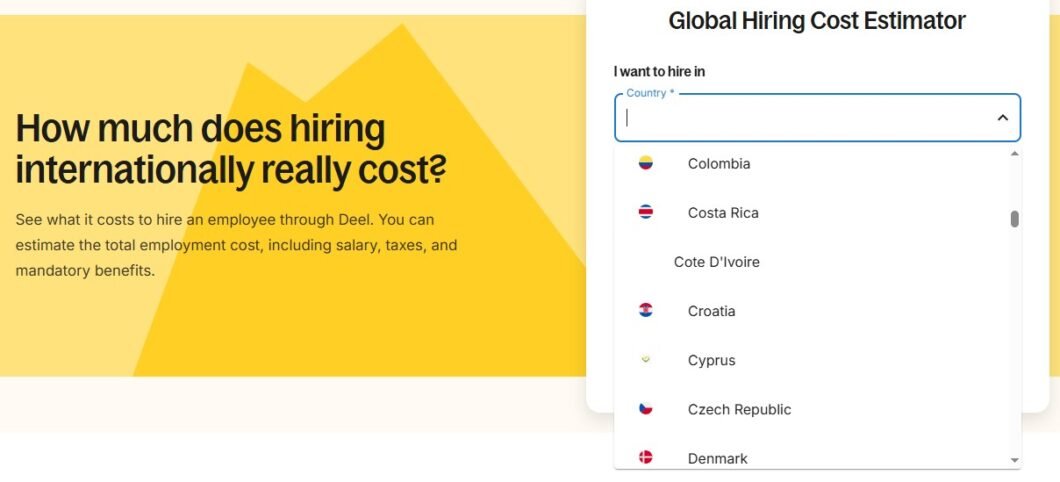
Rather than speaking in abstractions, here are the specific situations where Deel delivered the most value:
- Converting long-term contractors to employees. This is legally sensitive territory, particularly in countries that have started scrutinizing contractor relationships more aggressively. Deel’s EOR pathway made it straightforward to transition three people from contractor to employment status without recreating the legal infrastructure from scratch.
- Hiring in unfamiliar markets. When a team hires their first person in Kenya — or any market with unfamiliar labor law — the default knowledge of local statutory benefits, payroll tax obligations, and employment requirements is essentially zero. Deel’s in-country knowledge and automated compliance handling means that hire can happen with confidence rather than months of research.
- Managing a large contractor base efficiently. Managing contract renewals, payment schedules, and scope adjustments for a distributed contractor base manually would have required a dedicated ops person. Deel compressed that into a manageable activity for someone wearing multiple hats.
- Preparing for investment due diligence. As mentioned above, having clean, documented, centralized records of all contractor relationships became a genuine competitive advantage in a diligence process. Deel essentially became our compliance documentation system.
- Expanding into markets before committing to an entity. The ability to test a new market with an EOR hire before deciding to incorporate locally is a strategic advantage that’s hard to put a specific number on but very real in practice.
Things Nobody Asks About (But Should)
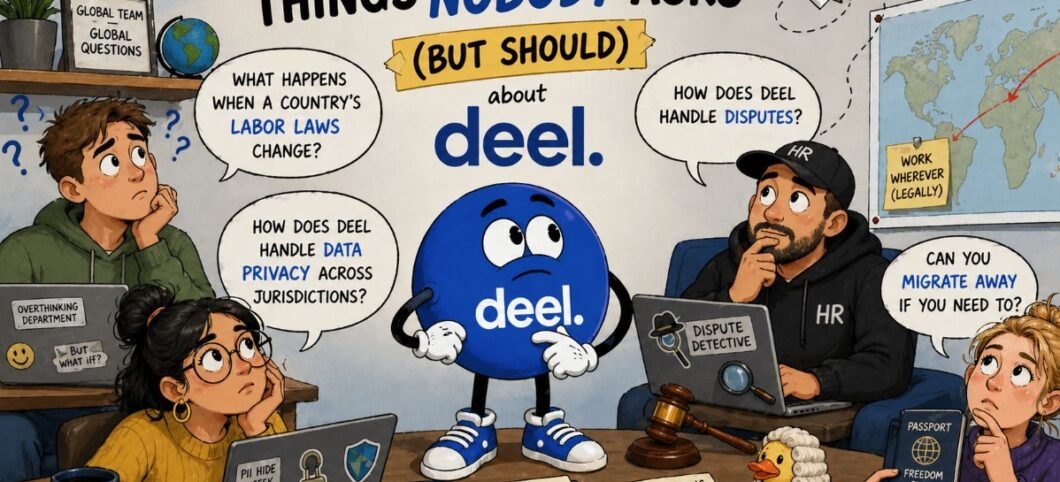
A few questions worth raising before you commit:
What happens when a country’s labor laws change? Deel has a compliance team that monitors legislative changes and updates their platform accordingly. Users report receiving proactive communications about changes that affect contractors in specific jurisdictions. It’s not perfect, but it’s meaningfully better than monitoring this yourself.
How does Deel handle disputes? If a contractor disputes a payment or a contract term, Deel acts as a platform, not a mediator. You’ll still need to resolve the underlying disagreement. What Deel provides is a documented record of what was agreed to and when, which is more useful than you’d hope in those situations.
Can you migrate away if you need to? This is the right question to ask about any vendor you’re building core operations around. Deel’s data export capabilities have improved significantly. You can get your contracts, payment history, and employee records out in readable formats. The EOR relationships themselves require more planning to transition, since you’re essentially unwinding a legal employment structure — but Deel has offboarding support for this.
How does Deel handle data privacy across jurisdictions? For companies hiring in GDPR-regulated environments or countries with strong data privacy laws, this matters. Deel has invested in their data privacy and security certifications, including SOC 2 Type II and GDPR compliance infrastructure. For most companies, this will be sufficient. For companies in highly regulated industries, you’ll want to involve your data privacy counsel in the evaluation.
Who Deel Is Really For (And Who Should Look Elsewhere)
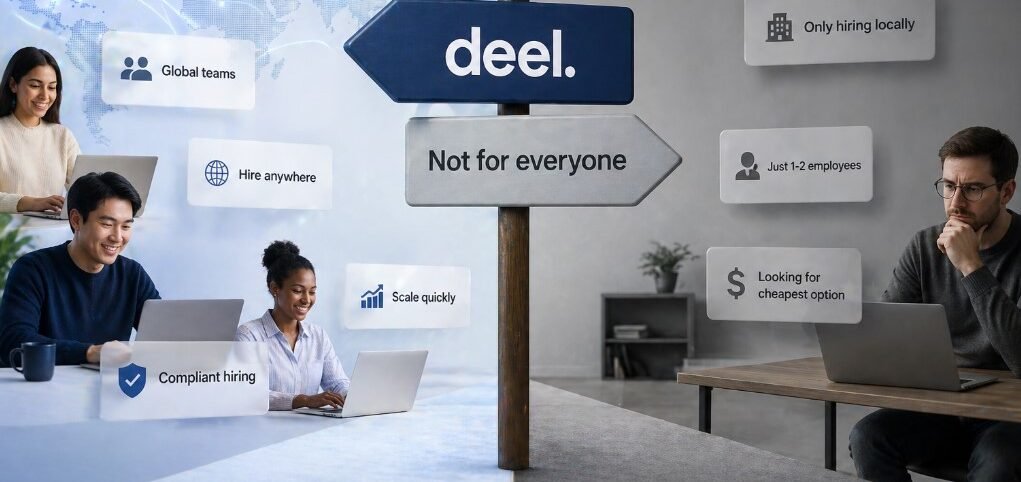
Here’s my honest assessment of fit:
Deel is a strong fit if you are…
- A company with contractors or employees in three or more countries, managing the complexity of multiple compliance regimes
- A startup that’s growing internationally and wants to move faster than setting up legal entities allows
- A team that needs to treat contractors well and wants the payment and administrative experience to reflect that
- A business preparing for investment or acquisition where clean documentation of international employment relationships matters
- An operator who has been burned by informal contractor arrangements and wants a defensible, structured approach going forward
Deel is probably not the right fit if you are…
- A US-only company with no near-term plans for international hiring — the pricing doesn’t justify it
- A company with a small number of contractors in predictable jurisdictions where a lighter tool would do the job
- A business that needs deep HRIS capabilities as the primary use case — Deel’s HRIS module is improving but isn’t the reason you’d choose it over a dedicated HR platform
- A team that expects white-glove support on every question — Deel is good at self-serve, but if you need constant hand-holding on complex compliance questions, you may want a more consultative vendor relationship
The Takeaway
There’s a version of this review that ends with a recommendation score out of ten. That format obscures what actually matters.
Deel is the product that should have existed the first time any team tried to pay a contractor in a country they’d never hired in before. It is not perfect. The pricing requires a conversation. The support is inconsistent at the edges. The platform occasionally tries to be everything and ends up doing some things with less depth than you’d want.
But the core product — compliant global contractor management, fast cross-border payments, country-specific contracts, and EOR capacity in over 100 countries — is genuinely well-executed. And it solves a problem that is real, expensive, and underappreciated: the friction and legal exposure of building a distributed team without the infrastructure to support it.
The teams that have switched to Deel quietly don’t talk about it much at conferences. They don’t post about it. They just… stopped having the problem. That’s probably the most honest endorsement in SaaS.
The best tools are the ones that solve the problem so completely that you stop thinking about the problem. For global hiring, Deel comes as close to that as anything on the market.
About this review: This review is based on in-depth platform research, publicly available user feedback, and conversations with operators who use Deel for global contractor and remote hire management. No compensation was received for this review. Opinions are the author’s own.